


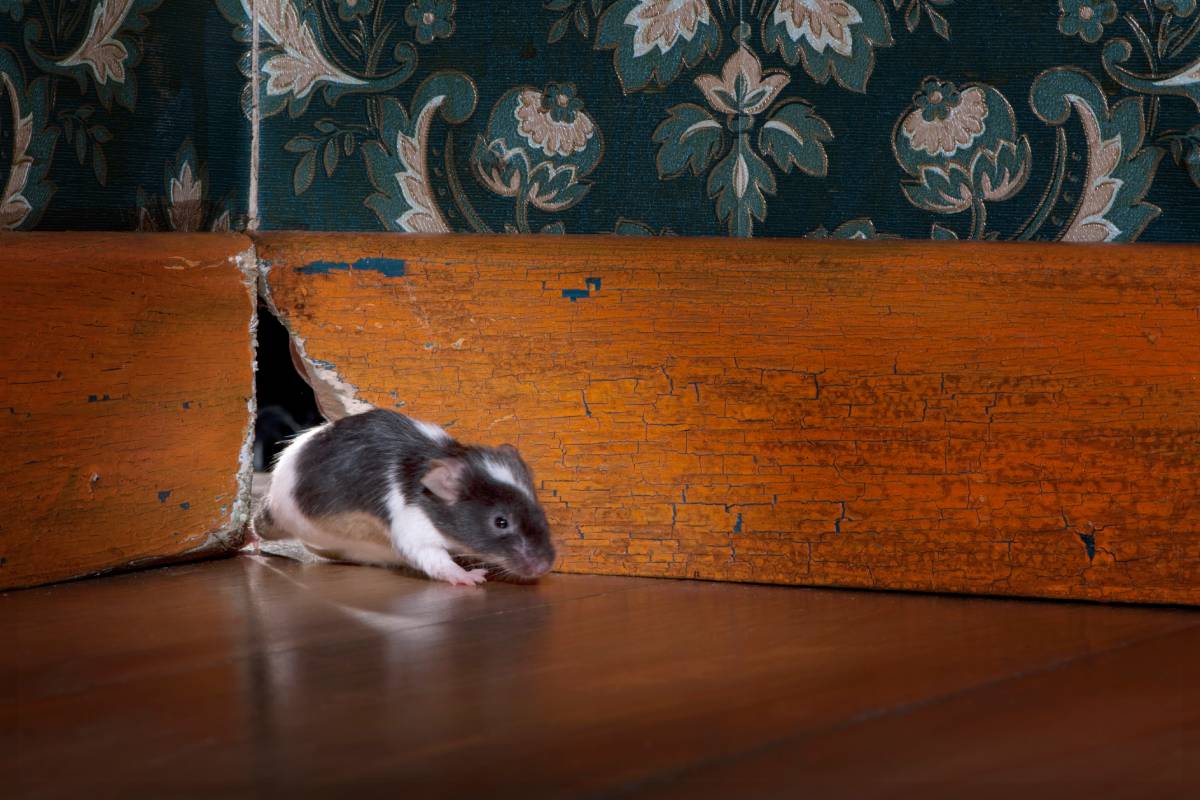
You hear scratching above the ceiling at 2 am and assume it is a possum. It probably isn’t. Brisbane’s subtropical climate keeps roof rats active year-round, and a single female rat can produce up to 84 offspring in one year (CSIRO). By the time you hear them, the entry point has already been used dozens of times.
Understanding what draws rats in and exactly how they enter your home is not optional knowledge; it is the only way to stop the problem before bait stations and traps become necessary.
What Attracts Rats to Your House?
Rats are not random. Every rat near your home is there because your property is advertising itself as a reliable source of at least one of three things: food, water, or shelter.
Food Sources That Bring Rats In
Open or loosely lidded bins are the single most consistent attractant. Rats have an acute sense of smell and can detect food through standard plastic bin lids. Pet food left outside overnight is equally problematic. A bowl of dry dog food in the backyard is indistinguishable from a bait station as far as a rat is concerned.
Fallen fruit from mango, lychee, and fig trees is one of the most consistent attractants for rats in the garden, and a single piece of rotting fruit left on the ground for 48 hours is enough to establish a nightly feeding route to your property.
Water Sources
Rats need water daily, and Brisbane properties provide it everywhere. Dripping outdoor taps, standing water in pot plant saucers, ornamental ponds, blocked gutters retaining rainwater, and pet water bowls all serve as reliable water sources. During Brisbane’s dry season (June-September), water becomes the primary driver pulling rats closer to residential structures.
Shelter and Warmth
Dense garden beds against the house perimeter, timber retaining walls, stored materials (pallets, cardboard boxes, firewood), and sub-floor cavities all provide ideal nesting conditions. Rats prefer warm, dark, and undisturbed spaces, and Brisbane homes with elevated timber floors, ceiling cavities, and dense tropical gardens give them exactly that.

How Do Rats Get Into Your House?
Rats do not need a large opening. A rat can compress its body to pass through a gap of approximately 20mm, roughly the diameter of a 50-cent coin. Their skeleton is flexible, and their skull, the widest point of the body, is the only true constraint.
The species common in Australia behaves differently in how they enter homes. The roof rat targets elevated cavities and rooflines, while the Norway rat burrows and prefers ground-level access near drainage and subfloor voids.
Ground-Level Entry Points
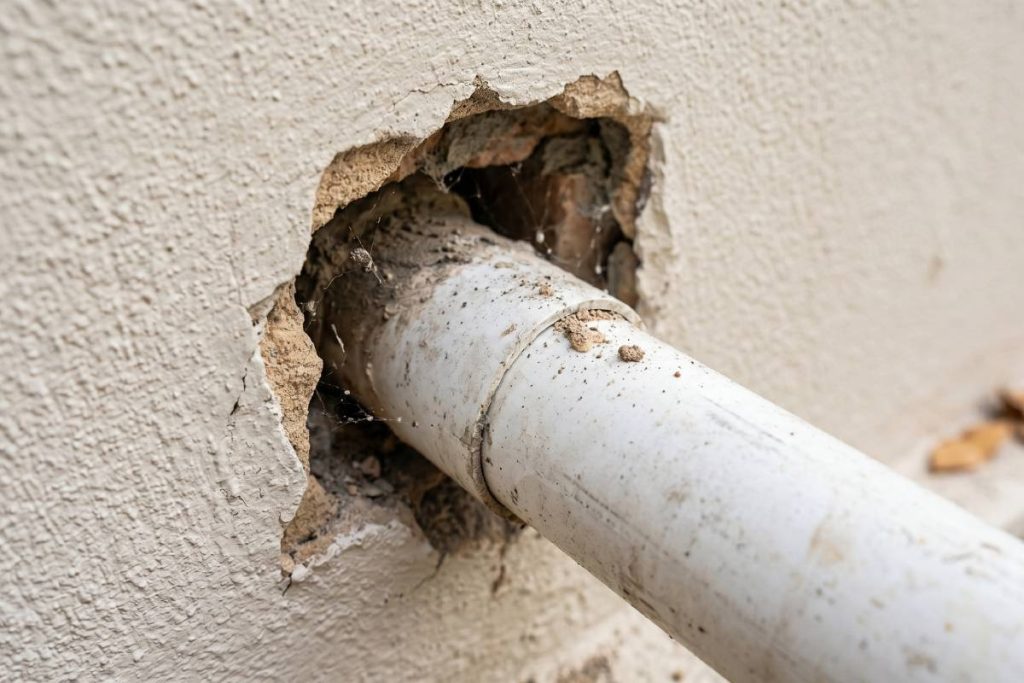
The most common ground-level entry points are gaps where plumbing or electrical conduits pass through the foundation or external wall. Builders typically leave clearance around these penetrations, and over time, caulking shrinks, cracks, or falls away entirely.
Cracked or damaged weep holes in brick veneer walls are a frequent entry point that most homeowners never inspect. Door seals that no longer make full contact with the threshold, particularly garage doors, are another overlooked access point. Rats regularly exploit the 10-15mm gap common under ageing garage doors.
Above-Ground Entry Points
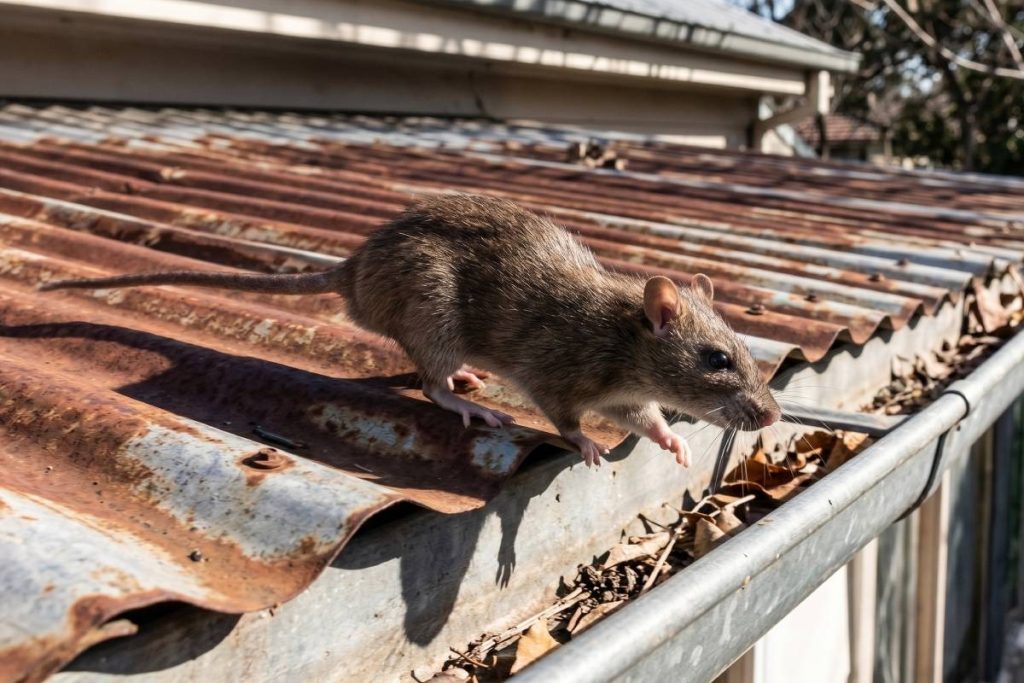
This is where Brisbane properties are particularly vulnerable. Roof rats (Rattus rattus) are the dominant species in South East Queensland and, unlike the Norway rat (Rattus norvegicus), which stays low, roof rats actively seek elevated entry points.
They access the roofline via overhanging tree branches, then enter through:
- Ridge cap gaps where the roof meets the gable end
- Corroded or missing roof ventilation screens
- The junction between eaves and fascia boards as the timber ages and warps
- Open or cracked roof vents
According to pest industry data, more than 80% of rat problems identified inside homes originate from drainage infrastructure — either broken or poorly sealed drain connections that allow rats to travel from the municipal sewer network directly into subfloor and wall cavities.
Can Rats Climb Walls?
Yes. Rats are competent climbers and will scale vertical walls when the surface provides grip. The key variable is texture.
What Surfaces Rats Can Climb
Roof rats can climb the following surfaces with ease:
Brick and rendered masonry — The mortar joints between bricks provide consistent grip points. A standard Queensland brick veneer wall presents no meaningful climbing barrier.
Timber weatherboard and cladding — The overlapping boards create natural footholds. Timber also provides a surface for rats to anchor their claws, even when the paint is intact.
Stucco and rough render — Any surface with aggregate or visible texture is scalable. Fine sand-finish render provides enough friction for a roof rat to ascend a full-height external wall.
Corrugated iron fencing and sheds — The corrugations act as a ladder. Rats traversing a Colorbond fence to reach a roof is a pattern SWAT technicians encounter regularly in Brisbane’s inner suburbs.
Downpipes, cables, and conduit — Covered separately below, but any cylindrical surface with a diameter under approximately 80mm can be gripped and climbed.
What Surfaces Can Rats Not Climb Reliably?
Smooth powder-coated steel, polished concrete, glass, and smooth PVC sheet are resistant. A rat placed on a fully smooth vertical surface cannot make upward progress. This is why rat guards, smooth metal discs fitted around pipes, are effective when installed correctly.
A real-world example: a Paddington, Brisbane homeowner called SWAT after four months of ceiling noise. The technician found no tree branches near the roofline and a sealed perimeter at ground level. The entry point turned out to be an unpainted copper downpipe running flush against the rendered wall. The rat was scaling the wall by gripping the brick on one side and the downpipe on the other.
Can Rats Climb Pipes?
Yes, and this is one of the most common and least-suspected entry routes in Brisbane homes.
Which Pipes Are Most Vulnerable
Vertical downpipes
These are the primary risks. PVC downpipes with a rough exterior surface or age-related degradation, and copper or galvanised steel downpipes, provide enough grip for rats to ascend to the roofline in seconds. Roof rats have been documented climbing smooth PVC downpipes by bracing against an adjacent wall.
Sub-floor plumbing penetrations
These are equally high-risk. Where drainage pipes pass through the concrete slab or sub-floor framing, the gap around the pipe is rarely sealed with rodent-proof material. Standard expanding foam is not rodent-proof; rats gnaw through it within hours.
Conduit and cable bundles
running vertically up external walls provides both grip and navigation cues. Rats learn routes and repeat them; a cable run that leads to a roof penetration becomes a permanent highway once discovered.
Soil pipes and sewer connections
also matters. Broken inspection points, cracked clay sewer lines, and missing caps on disused drain cleanouts allow rats to surface inside the property boundary, dramatically shortening the distance to the house.
Entry Point Risk Table
| Entry Point | Risk Level | Rat Type | Prevention Method |
| Overhanging tree branches | Very High | Roof rat | Trim branches 1m+ from roofline |
| Unsecured roof vents/screens | Very High | Roof rat | Install steel mesh (≤6mm gauge) |
| Vertical downpipes | High | Roof rat | Fit cone-style rat guards |
| Gap around plumbing penetrations | High | Both | Steel wool + rodent-proof sealant |
| Broken/cracked drainage | High | Norway rat | CCTV drain survey, repair, cap |
| Weep holes in brick veneer | Medium | Both | Weep hole covers (maintain ventilation) |
| Garage door seal gaps | Medium | Norway rat | Replace the door brush seal |
| Sub-floor access vents | Medium | Both | Galvanised mesh with ≤6mm holes |
| Window flyscreen damage | Low-Medium | Roof rat | Repair or replace damaged mesh |
| Wall cracks and gaps | Low-Medium | Both | Mortar repair + external sealant |
Signs You Already Have Rats Inside
Knowing the entry points is only useful if you catch the problem early. The following signs indicate rats are already active inside your property:
Droppings
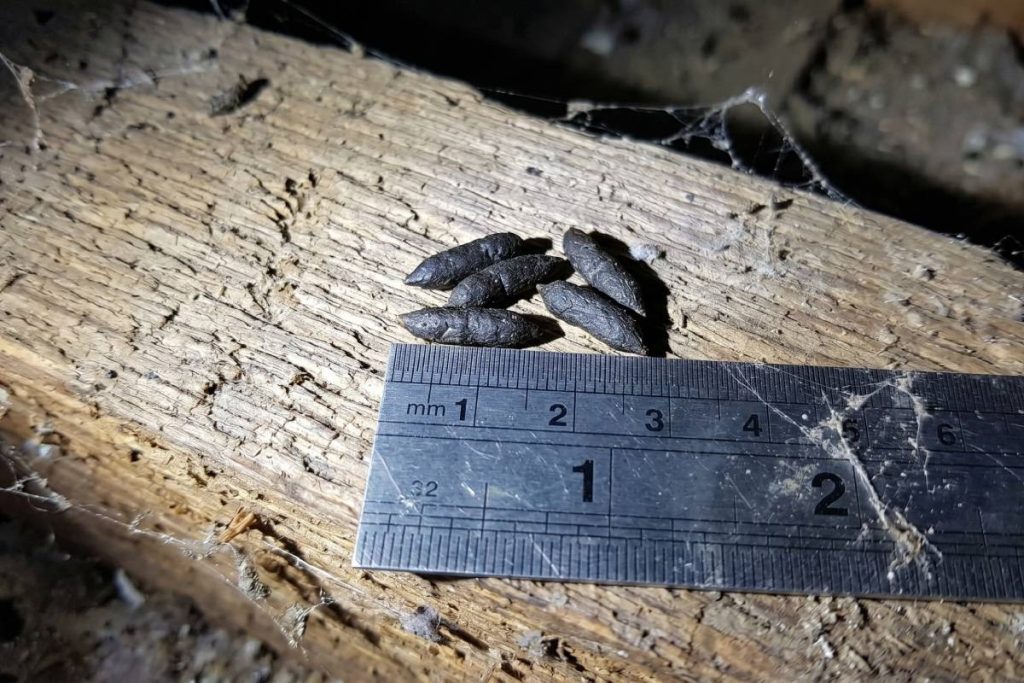
They are the most definitive indicator. Roof rat droppings are 12-18mm long, tapered at both ends, and dark brown to black. Norway rat droppings are larger (20mm+) and blunt-ended. Fresh droppings are soft and shiny; older droppings become dry and grey.
Rat droppings and urine are not just unpleasant; the diseases rats carry include leptospirosis, salmonellosis, and rat-bite fever, all of which can be transmitted to humans through contact with contaminated surfaces.
Scratching or running sounds in the ceiling
They are almost always nocturnal, typically beginning between 10 pm and 2 am. Possums produce slower, heavier movement; rats produce rapid, light scurrying.
Gnaw marks
on timber framing, PVC conduit, insulation, and stored food packaging. Rats gnaw constantly because their incisor teeth never stop growing; they must wear them down.
Grease smears along walls and pipes
Rats follow the same routes repeatedly and leave oily smear marks from their fur on surfaces they brush against.
Urine odour
in enclosed spaces such as the roof cavity, sub-floor, or inside cupboards adjacent to plumbing.
How to Stop Rats From Getting In
The most effective rat prevention approach combines three actions in sequence: remove attractants, close entry points, and monitor.
Remove attractants first
Transfer bin contents into hard-sided bins with clip-lock lids. Pick up fallen fruit within 24 hours. Move pet water bowls inside at dusk. Fit a sealed compost system rather than an open pile. These changes reduce the incentive to explore your property further.
Seal entry points with rodent-proof materials
Standard caulk, foam, and timber are not sufficient; rats gnaw through all three. Use galvanised steel mesh (gauge ≤6mm), stainless steel wool packed tightly, then sealed, or purpose-formulated rodent-proof sealant for any gap you are filling permanently. Every external pipe penetration, weep hole, and vent screen needs to be assessed.
Trim all vegetation
Any branch within one metre of the roofline is a viable bridge. Palm trees with their rough trunk fibres are particularly easy for roof rats to scale. Trim all palm fronds that overhang or touch the structure.
Install rat guards on downpipes
Cone-shaped metal guards fitted approximately 600mm above ground on downpipes break the climbing route. They are inexpensive and last for years.
Monitor with a professional inspection annually
Brisbane’s climate means rat pressure is year-round rather than seasonal. A professional rodent inspection can identify new entry points, gnaw damage in concealed spaces, and active harbourage areas before an infestation establishes.
Summary
- What attracts rats: Food (unsecured bins, pet food, fallen fruit), water (dripping taps, pot plant saucers, blocked gutters), and shelter (dense vegetation, roof cavities, sub-floor spaces).
- How they get in: Gaps as small as 20mm around pipes, damaged weep holes, broken roof screens, overhanging branches, and faulty drainage infrastructure.
- Can they climb: Yes, rough walls, brick, timber cladding, downpipes, cables, and conduit are all scalable. Smooth powder-coated metal and glass are resistant.
Hearing rats in your ceiling or noticing signs of activity around your Brisbane property? SWAT Pest Control offers licensed rodent inspections and treatment with a 12-month warranty. Call 07 3901 0420 or contact us online.